What advertisers actually look for in a show
A playbook from the buyer's side of the table — the real signals advertisers evaluate beyond download count, with the data behind each one and how to make your show the obvious, low-risk yes.
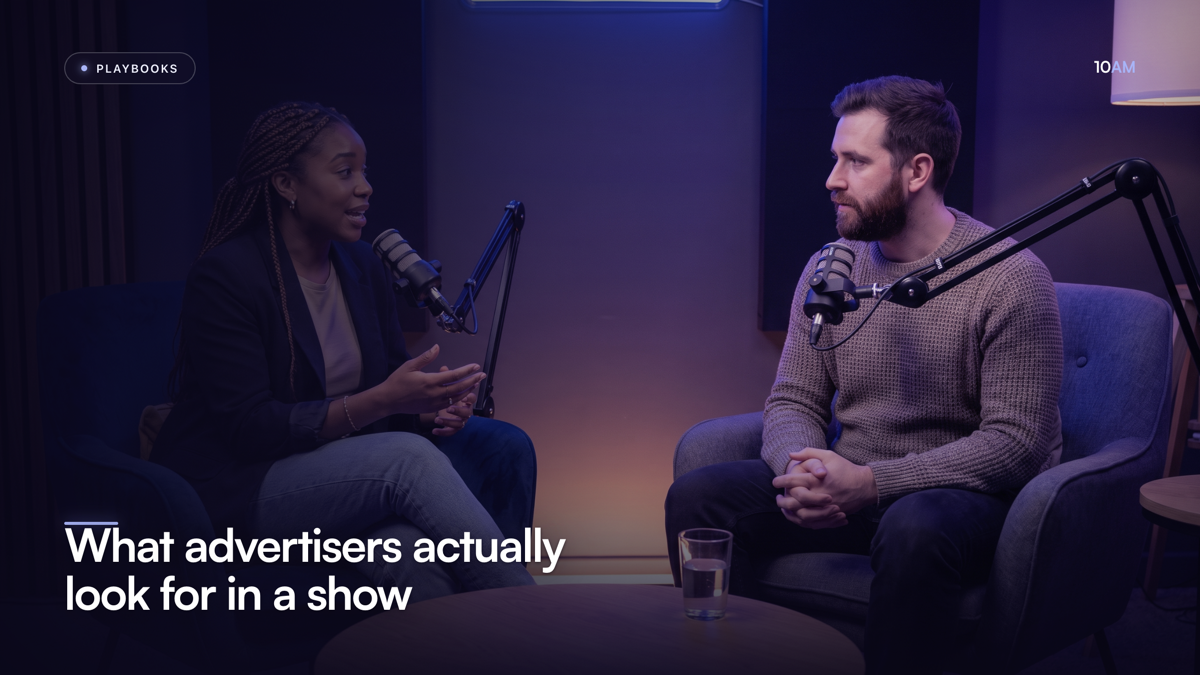
To land sponsorships, it helps to sit on the other side of the table. An advertiser is not trying to reward you for making a good show — they are trying to spend a budget without getting fired. Every signal they look for is really a question about risk and return. Give them confident answers and you become the easy yes.
They look for audience fit first
The single biggest factor is not size — it is whether your listeners are their customers. A media buyer would rather reach 2,000 people who are all in-market than 50,000 who are not. This is why niche shows punch above their weight: business, finance, and tech audiences command 30 to 50 percent higher CPMs precisely because they convert for the right brand.
Your job is to make fit obvious. Be able to state, in one sentence, exactly who listens and what they are trying to do. "Founders of early-stage software companies figuring out their first marketing hires" is a fit an advertiser can price. "People interested in business" is not.
They look for engagement, not just reach
Advertisers have learned that attention is the real product, and podcasts deliver it better than almost any channel: surveys consistently find that around 71 percent of listeners pay attention to podcast ads, far above most digital media, and two-thirds trust host recommendations. Podcasting also reaches an enormous, engaged base — 158 million monthly U.S. listeners in 2025, most tuning in specifically to learn (74 percent) — so the medium is credible before you say a word. But a buyer will want proof that your audience is engaged, not just the format.
Signals that matter: episode completion rate, repeat listenership, replies and DMs, community activity, and — most persuasive of all — evidence that listeners have acted on past recommendations. A screenshot of listeners asking "where do I buy this?" is worth more than a chart of raw downloads.
They look for brand safety
No buyer wants their brand read out next to content that will end up in a screenshot for the wrong reasons. Brand safety is table stakes, and for a small independent show it is actually an advantage you can lean into: a consistent, well-defined show is inherently safer than a chaotic one.
Advertisers are not buying your best episode. They are buying the promise that every episode is one they would be comfortable standing next to.
You demonstrate safety through consistency of tone, a clear topic identity, and an honest description of what your show does and does not cover. Marketplaces layer automated brand-safety screening on top, but that screening only confirms what your consistency already established.
They look for measurability
The modern advertiser lives and dies by attribution. A campaign they can measure gets renewed; one they cannot gets cut, no matter how much they liked the read. This is great news for podcasts, because host-read campaigns actually perform — matched host-read flights commonly report 3 to 5 times return on ad spend, well above programmatic display's typical range.
Make the result visible. Offer a unique promo code or a dedicated trackable link, and send a short recap after the campaign with redemptions, clicks, or sign-ups. You are handing the advertiser the exact evidence they need to justify spending more with you next quarter. Even a simple version — "the code was used 34 times in two weeks" — reframes the next negotiation entirely.
They look for professionalism and low friction
Finally, buyers reward creators who are easy to work with. That means responding quickly, hitting deadlines, delivering a clean read, and providing assets that look finished. Every point of friction — a chased invoice, a missed air date, an amateur graphic — is a reason to place the budget elsewhere next time. A good creative experience is quietly one of the strongest reasons a campaign renews.
Turn the checklist into your pitch
Package these signals deliberately. A simple one-page media kit that leads with audience fit, backs it with engagement numbers, states your brand-safe topic identity, and promises trackable results answers every question a buyer has before they ask it. Order it the way they think: fit, then engagement, then safety, then measurement, then ease.
Platform tooling makes each signal easier to deliver. An ads marketplace matches you to advertisers by what your show is genuinely about — meaning, not keywords — so the fit is real before anyone talks, with brand-safety checks and your own final approval built in. An ad studio drafts a host-style script, generates a natural voice read, and designs a matching graphic, so your delivery looks professional every time. And trackable short links and promo codes turn each campaign into the measured result that earns the renewal. Answer the buyer's real questions — fit, engagement, safety, measurement, ease — and the size of your download number stops being the conversation.