Selling tickets to a live taping
How to turn an episode into a live event your audience pays to attend — pricing tiers that create urgency, why charging even a little slashes no-shows, and a timeline you can run start to finish.
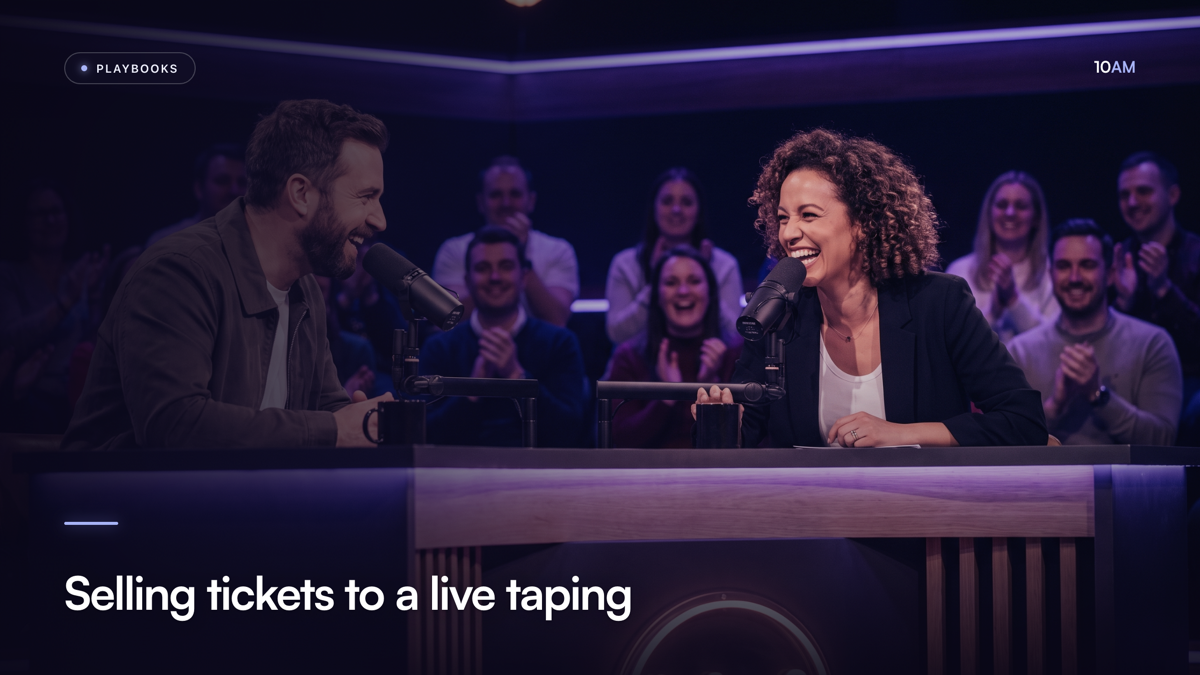
Why a live taping is worth the effort
A live taping does something a normal episode cannot: it puts your most devoted listeners in a room together and lets them feel like part of the show instead of an audience for it. That night becomes content — a special episode with real energy — and it becomes a memory that turns casual fans into evangelists who tell everyone they were there. It is also one of the clearest, most direct ways a show earns money from the people who already love it, without asking a sponsor for permission.
You do not need a theater. A back room at a bar, a small event space, or a partner venue is plenty for a first taping. The goal is intimacy and proof, not scale.
Charge something — even a little
The instinct to make your first event free is understandable and wrong. Free in-person events see roughly 40% to 60% no-shows, because an RSVP that costs nothing commits nobody. Paid events see closer to 10% to 20%. The jump is dramatic at even tiny prices: charging just $5 has been shown to drop no-shows to around 15%, and charging more than $10 drops them below 5%. Among paid events, the no-show rate stays low fairly flat regardless of how easy you make signup — payment, not friction, is what filters for people who will actually turn up.
So a ticket price is not only revenue. It is the mechanism that fills the seats you sold. A room that is genuinely full because everyone there paid to be there is a far better show than a free event where half the RSVPs ghost.
A ticket price is a promise to show up. Charge even $5 and you are not just making money — you are guaranteeing a room that is actually full on the night.
Build pricing tiers that create urgency
Do not sell one flat ticket. Three to five tiers work best for most events because they manufacture a reason to buy now instead of later. A simple, proven structure:
- Early bird — priced 15–25% below standard, strictly capped by quantity or a hard deadline. Aim it at your first chunk of capacity. Organizers commonly sell 30–40% of all tickets in this phase, which hands you working capital and early proof of demand.
- General admission — the standard price, available until the event or until it sells out.
- VIP or premium — a small run of higher-priced tickets with something extra: early entry, a meet-and-greet, a reserved front row, or merch bundled in.
Each tier gives a different listener a reason to act. The early bird rewards your keenest fans and gets money in early; the VIP tier lets your biggest supporters spend more because they want to, not because you squeezed them.
Consider a gated presale for your core fans
Before you open sales to everyone, offer a presale to the people closest to you — your email list or paying members. A presale is gated (it needs a link or a code) and its whole purpose is to reward your most engaged audience before the general public gets in. Allocating something like 15–25% of your capacity to a presale does two things: it makes loyal listeners feel recognized, and it can quietly sell out a meaningful share of the room before you have announced anything publicly. Nothing markets an event like the words "almost sold out" on day one.
A timeline you can actually run
Work backward from the date and keep it simple:
- 4–6 weeks out: lock the venue and date, set your tiers and prices, and publish the ticket page.
- 3–4 weeks out: run the gated presale to your list and members. Let them in first.
- 2–3 weeks out: open early-bird sales to everyone and announce it on the show and socials.
- 1 week out: early bird ends, general admission is live, and you push the "limited seats" message.
- The final days: send reminders with the address, start time, and what to expect. This is where you protect the low no-show rate you paid for.
Turn one night into the next one
The event does not end when the recording stops. Capture it — photos, a clip, the audio for a special episode — and share it with everyone, including the fans who could not make it. That coverage becomes the trailer for your next taping, and the people who missed out become the first to buy. A live show is not a one-off; it is the start of a habit your audience will pay to keep.