Grow with partners, not ad spend
Paid ads rent you attention until the budget runs out. Partnerships compound. Here's an honest playbook for finding, pitching, and structuring partner growth — including where it's slower and harder than buying clicks.
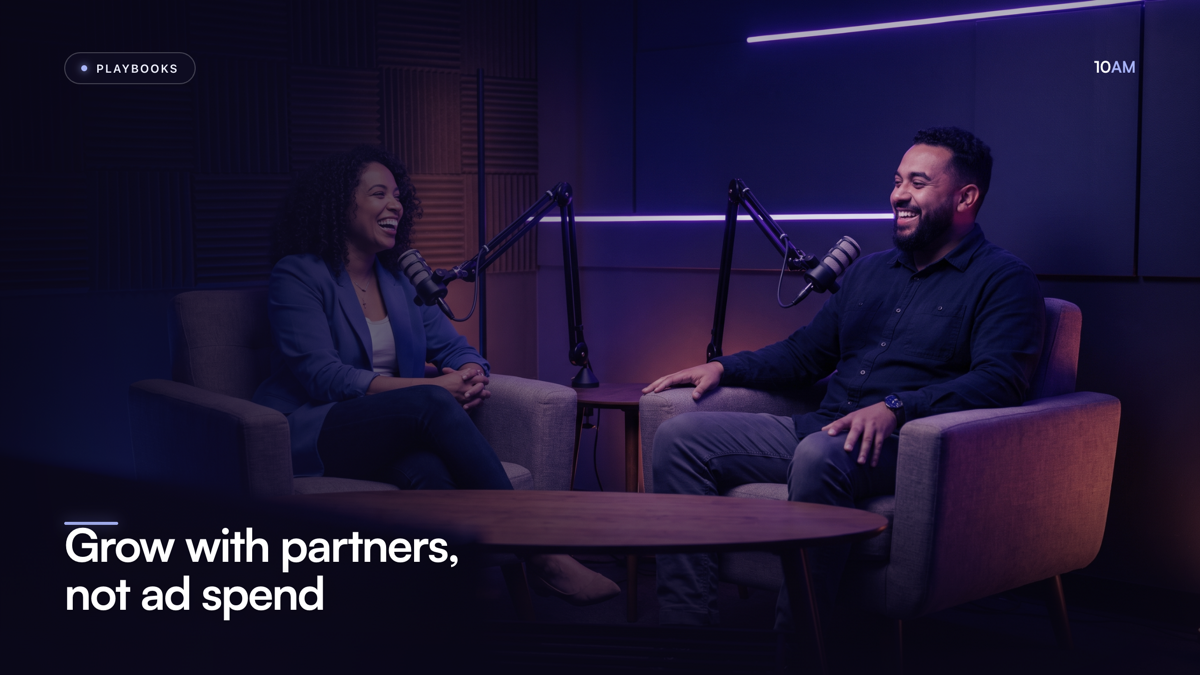
Paid ads have one honest virtue: they're fast. You put money in, clicks come out, and the moment you stop paying, it all stops. Partnerships are the opposite — slow to start, awkward to arrange, and then they keep paying you back long after the effort. If you're a creator without a war chest, partnerships aren't the consolation prize. They're the better bet. But only if you run them deliberately.
Rented attention vs. owned relationships
Every dollar in an ad account buys a moment of attention and then evaporates. The relationship belongs to the platform, not to you. A partnership builds something you keep: a warm connection to another creator's audience, and a reason for them to send people your way again. The cost difference is real and well documented — partnership CAC is commonly cited around $75–$200 versus $200–$500 for paid search, and referral-style channels routinely undercut paid ads on acquisition cost.
Ads rent you a crowd for as long as you keep paying. Partnerships hand you an introduction you get to keep.
The honest tradeoff: ads scale on command, partnerships scale on trust. You can double your ad budget this afternoon. You cannot double your relationships this afternoon. Choose partnerships when you have more time and taste than cash — which describes most creators most of the time.
Find partners by audience overlap, not size
The instinct is to chase the biggest name you can. Wrong instinct. The best partner shares your audience, not your ambition. A giant show with a mismatched audience sends you clicks that bounce; a same-sized show with the exact right listeners sends you people who stay.
- Adjacent, not identical. A meditation podcast and a sleep-story podcast serve overlapping people without competing head-on.
- Complementary offers. If you sell a course and they sell a tool their audience needs alongside it, you make each other more useful.
- Similar values and tone. Your audience feels a bad-fit partner instantly. Protect the trust you've earned.
Make a list of ten shows or creators whose audience would genuinely benefit from you. Ten real, specific names beats a vague plan to 'do partnerships.'
Lead with their upside
Most partnership pitches fail because they're a request dressed as an offer. 'Can you promote me?' asks for a gift. Instead, open with what they get. The strongest pitches are specific and pre-baked:
- 'I'll feature you to my 500 listeners this month — want to trade?'
- 'I recorded a segment your audience would love; it's ready to drop in.'
- 'Your tool solves a problem my listeners email me about weekly. Let's set up a tracked link so you can see exactly what I send you.'
Do the work of imagining their win, and you go from 'another person wanting a favor' to 'someone who made my day easier.' That reframing is most of the game.
Structure the deal so nobody guesses
Partnerships rarely blow up over greed. They blow up over ambiguity — two people quietly assuming different terms. Before anything goes live, agree on:
- What each side does — a shoutout, a swapped episode, a dedicated email, a revenue share.
- How you'll measure it — unique tracked links per partner, so credit is never a debate.
- What counts and when you pay — the attribution window (30 days is a common default) and payout timing, in writing.
This isn't distrust; it's respect. Clear terms are what let a good first collaboration become a standing one.
Track it or you're flying blind
A partnership you can't measure is a favor you can't repeat with confidence. Give every partner a unique branded short link and let the click be captured first-party, on your own domain. This matters more than it used to: browsers like Safari now strip tracking parameters from URLs, so a naked ?ref= can vanish before your site records it — and your partner gets wrongly blamed for 'clicks that didn't count.'
10AM's Links & Referral tools handle this end to end: a memorable branded link per partner, first-party click capture that survives stripping, and conversions stitched back to the right person. Branded links pull their weight on the front end too — Rebrandly's testing across millions of links found they earn up to 39% more clicks than generic short URLs, because a recognizable domain simply reads as safer to click.
Start small and let it compound
The magic of partnerships is that they build on each other. A worked example:
- You swap shoutouts with one same-size show. Modest bump, but you now have a happy collaborator.
- That collaborator introduces you to two others in the same niche. You've tripled your reach through one relationship.
- You co-produce an episode with the best fit, and both audiences discover a creator they'll follow for years.
None of those steps required a budget. Each one made the next easier. That's the compounding ads can't do — every partnership makes you a more attractive partner for the next one.
When ads still make sense (be honest)
Partnerships aren't a religion. Paid ads win when you need speed you can't negotiate — a launch date, a time-boxed promotion, a test of new messaging you want answered this week. The healthiest approach uses ads as a sprint and partnerships as the long game: buy attention when timing forces your hand, and spend the rest of your energy building relationships that keep paying after the campaign ends. If you only ever rent attention, you never own anything. Start with ten names, lead with their upside, track every link — and let the relationships compound.